A Capital on the Silk Road
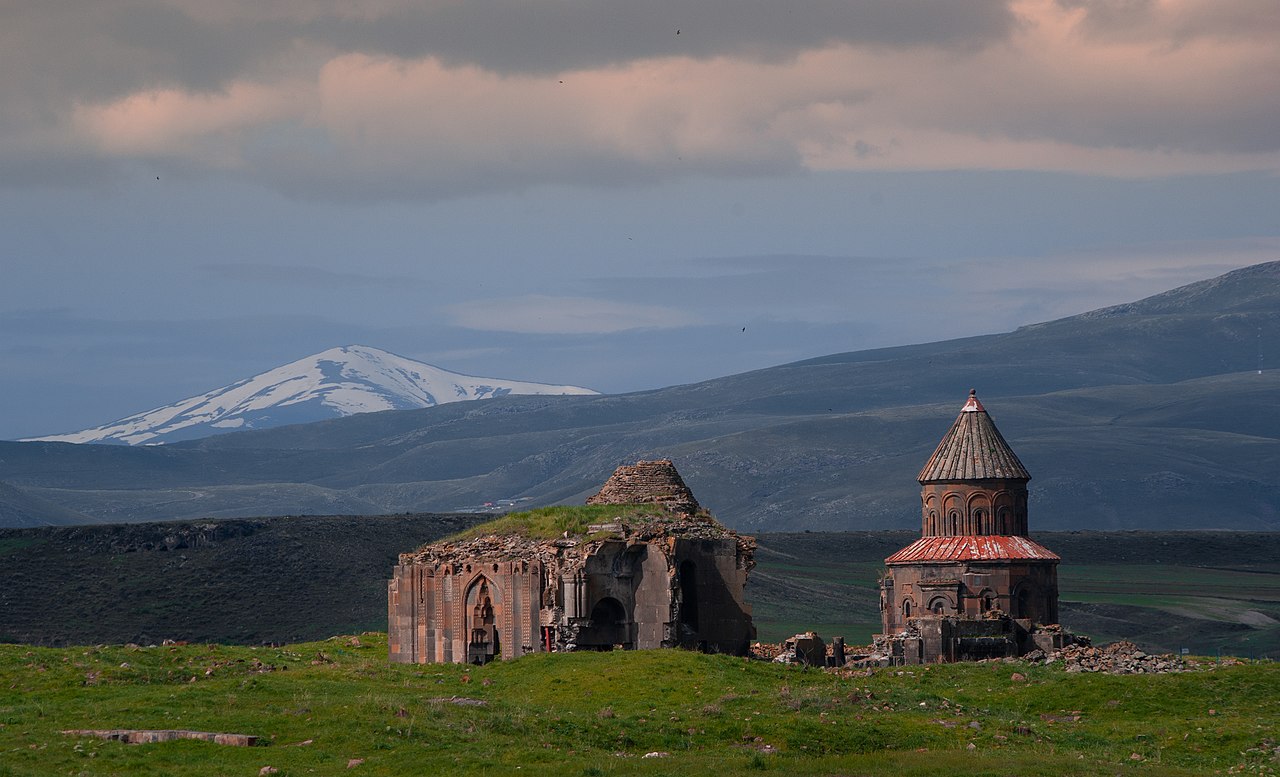
The city of Ani rises from a windswept plateau in eastern Turkey, its ruined cathedrals and fortifications standing against the sky. In the 10th century, this was no ghost town but a thriving metropolis and the capital of the Bagratid Armenian kingdom. King Ashot III moved the capital to Ani in 961, initiating a golden age of construction and commerce. Its strategic position on a branch of the Silk Road turned it into a center for trade, and its population swelled to an estimated 100,000 people, similar in size to Constantinople and Baghdad.
The city's wealth was visible in its architecture. The name "City of 1,001 Churches" was a sign of its importance as a religious center, although archaeologists have identified around 50 churches and dozens of chapels. This prosperity, however, made it a target. After the Bagratid kingdom was weakened by internal disputes, the Byzantine Empire annexed Ani in 1045. This was followed by the Seljuk Turk conquest in 1064, Mongol raids beginning in 1236, and a devastating earthquake in 1319. Combined with shifting trade routes, these events led to Ani's slow decline and eventual abandonment by the 1700s.
An Architectural Laboratory
The ruins of Ani are an open-air museum of medieval Armenian architecture. The largest standing structure is the Cathedral of Ani, with construction starting in 989 and finishing by 1001. Its architect, Trdat—who also helped rebuild the dome of Hagia Sophia in Constantinople—designed a domed basilica with clustered piers and pointed arches. These features predate their widespread use in European Gothic architecture by centuries. The cathedral's dome and drum collapsed during the 1319 earthquake.
Another significant structure is the Church of St. Gregory of Tigran Honents, completed in 1215 by a wealthy merchant. Its interior is covered with one of the most extensive and well-preserved fresco cycles in the region, depicting scenes from the life of Christ and St. Gregory the Illuminator.
Perhaps the most dramatic ruin is the Church of the Redeemer, finished in 1035. This centrally planned, 19-sided building was a unique architectural experiment. In 1957, a lightning strike split the building almost perfectly in half, leaving a massive cross-section that reveals its internal construction. Today, only this western half remains standing, a record of the city's history and eventual fate.