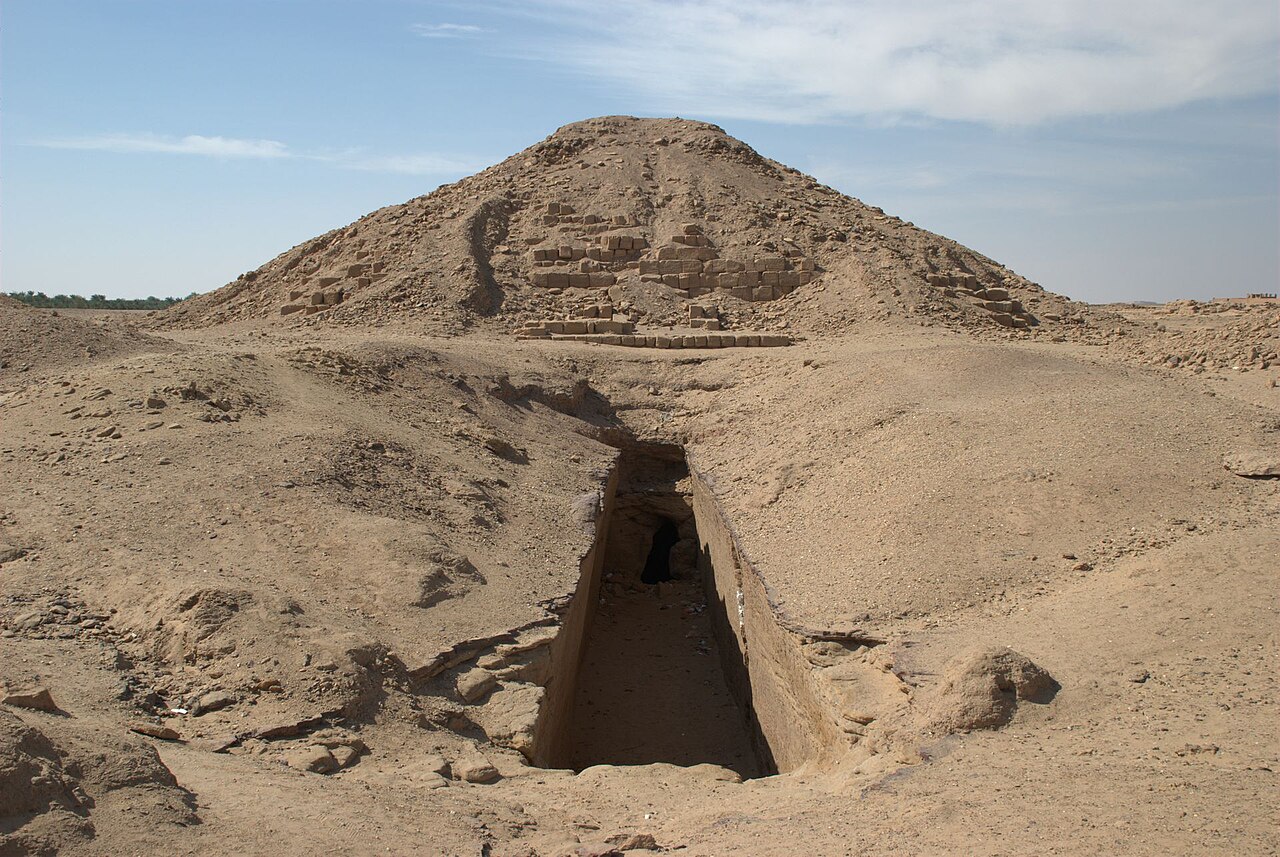
The Necropolis of the Black Pharaohs
The royal cemetery at El-Kurru marks the genesis of a dynasty that would unite Nubia and rule all of Egypt. Located in what is now northern Sudan, the site was the primary burial ground for the early monarchs of the Kingdom of Kush from about 850 to 650 BCE. These rulers, known as the "Black Pharaohs," established Egypt's 25th Dynasty. The necropolis contains the tombs of at least four of these powerful kings: Piye, Shabaka, Shebitqo, and Tantamani.
The funerary architecture at El-Kurru shows a clear evolution. The earliest tombs are traditional Nubian tumuli—circular mounds of earth and gravel over a burial pit. Over generations, these structures became more elaborate, incorporating enclosure walls and then small, flat-topped mastabas. The tomb of King Piye (c. 750 BCE) changed the design, introducing a subterranean vaulted chamber with a pyramid superstructure. His successors followed this model, building small, steep-sided pyramids constructed from local sandstone. These structures are characteristically Nubian, with an incline of around 68 to 70 degrees, much sharper than the 40 to 50-degree slopes of Egyptian pyramids. The pyramids themselves were mostly solid, built over rock-cut stairways that descend to the underground burial chambers. Though all the tombs were plundered in antiquity, the remaining structures and artifacts provide direct evidence of the rising power and wealth of the Kushite kingdom.
Funerary Science and Sacred Horses
The most distinctive scientific and cultural feature of El-Kurru is the cemetery of royal horses. Located about 120 meters from the kings' pyramids, archaeologists discovered 24 deep pits containing the remains of horses buried with their rulers. Four rows of graves correspond to the reigns of Piye, Shabaka, Shebitqo, and Tantamani. The animals were interred in a standing position, supported by the shape of their custom-dug pits, and adorned with all their trappings, including beads and silver plume holders.
This practice differs from Egyptian customs. While Egyptians mummified animals as religious offerings or to accompany their owners as pets in the afterlife, they did not perform ritual burials of royal steeds on this scale. The El-Kurru horse burials point to a different cultural value system, where the horse was a symbol of military power and an essential companion for a warrior king's transition into the next world. Analysis of some of the skeletons reveals pathologies common in workhorses, suggesting they were powerful, intentionally bred animals central to Kushite military success.
Only two of the human tombs at El-Kurru retain significant interior decoration: the burial chambers of King Tantamani and his mother, Queen Qalhata. Discovered by American archaeologist George Reisner in 1919, these subterranean rooms are covered in paintings depicting the rulers' path through the underworld, with bright images of gods and religious texts written in Egyptian hieroglyphs.