A Sub-Arctic Time Capsule
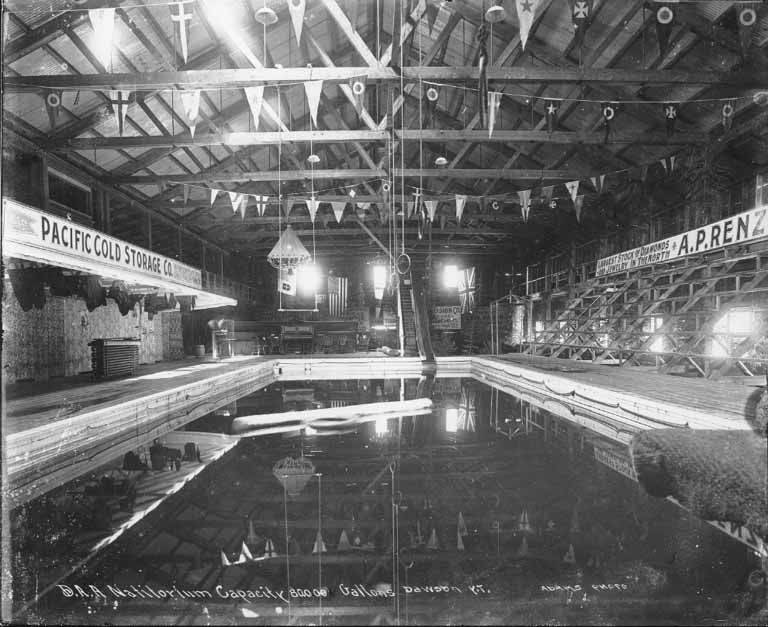
In 1978, a construction crew excavating land for a new recreation center in Dawson City made an astonishing discovery. Buried beneath the former site of the Dawson Amateur Athletic Association (DAAA) hockey rink, they found a solid mass of 533 film reels. This cache of highly flammable cellulose nitrate film had been used as landfill in 1929, dumped into a decommissioned swimming pool to level the ground for the rink. Dawson City was the end of the distribution line for film studios, and with no return address, the reels accumulated in the local library's basement. A bank employee and hockey association treasurer named Clifford Thomson devised the plan to use the 500,000 feet of unwanted film as fill.
What Thomson created was an unintentional preservation vault. The subarctic permafrost kept the film at a constant low temperature, slowing the chemical decay that would have otherwise destroyed it. The find contained 372 titles from between 1903 and 1929, including lost works starring actors like Fatty Arbuckle, Harold Lloyd, and Lon Chaney. Newsreels, short films and feature films—many of which were the only known surviving copies—were pulled from the frozen earth.
The Science of Cold Preservation
Cellulose nitrate, the film stock used during the silent era, is unstable. It contains its own oxygen source and can decompose rapidly, releasing acidic gases that further speed up its decay in a process known as autocatalysis. As it degrades, it becomes sticky, brittle, and eventually turns to a flammable powder. Deteriorated nitrate film can even self-ignite at temperatures over 100°F (38°C).
The Dawson City permafrost provided the ideal storage conditions that archival science now recommends: cold and dark. The consistently freezing temperatures drastically slowed the rate of chemical decomposition. While many of the films suffered from water damage, the core images were remarkably preserved. The recovery was a delicate operation. Because the material was so volatile, commercial couriers refused to transport it. The Canadian Armed Forces eventually flew the reels on a Hercules military aircraft to Library and Archives Canada and the U.S. Library of Congress for painstaking restoration. This collaboration saved footage that showed the early 20th century.