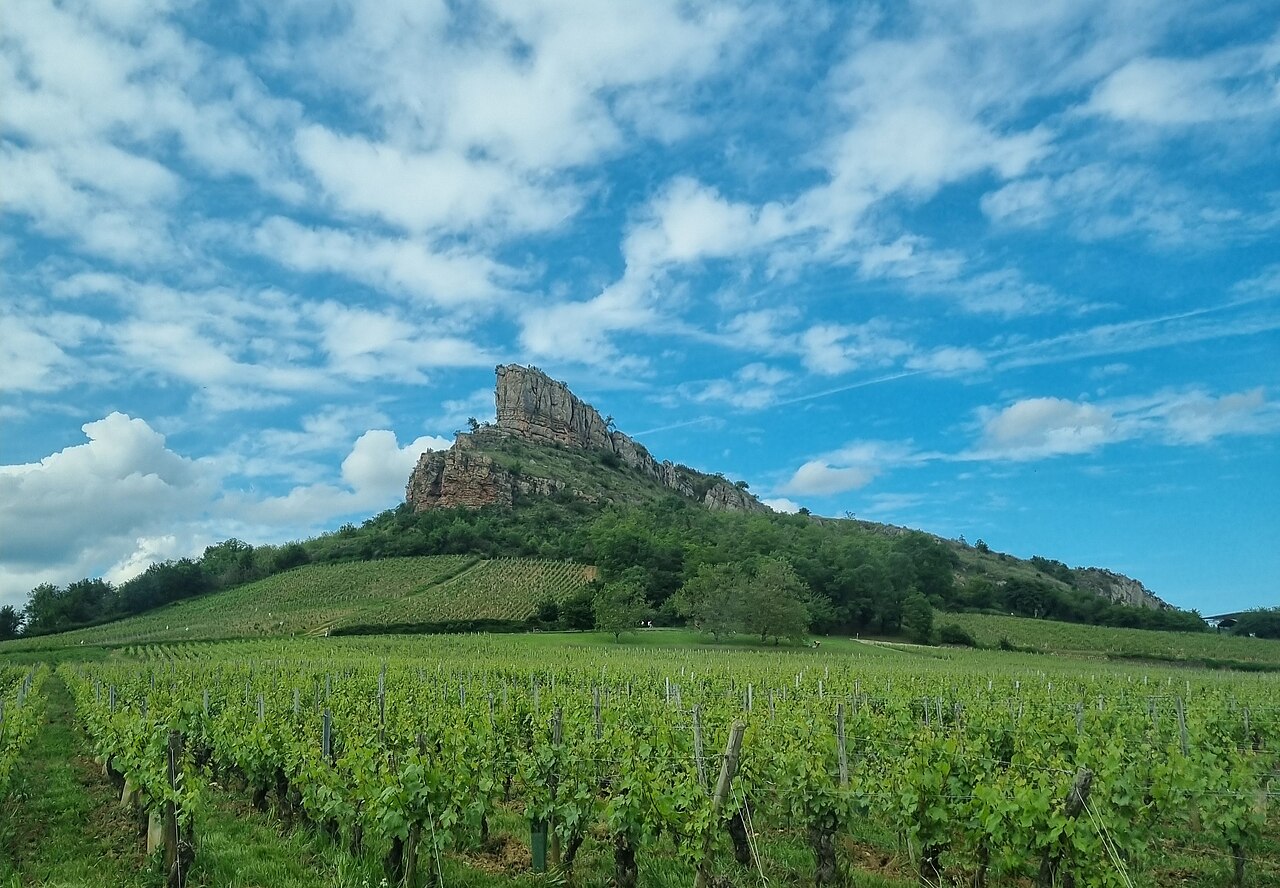
A Paleolithic hunting ground
At the foot of the Rock of Solutré, archaeologists in 1866 uncovered a massive deposit of animal bones. This layer, in some places one meter thick and covering nearly a hectare, contains the remains of more than 100,000 horses (Equus ferus gallicus and arcelini). The site was a specialized hunting ground for at least 25,000 years, with human activity documented from about 35,000 to 10,000 B.C. Four distinct Paleolithic cultures used this location: the Aurignacian, Gravettian, Solutrean, and Magdalenian.
The sheer quantity of horse remains initially led to a dramatic theory. In an 1872 novel, archaeologist Adrien Arcelin imagined hunters driving entire herds off the top of the 493-meter-high limestone escarpment. This "horse jump" idea became popular but has been refuted by modern zooarchaeological analysis. Scientific investigation shows the bone deposit is located as much as 100 meters away from the base of the sheer cliff, an unlikely spot for animals that had fallen from directly above. The bones also lack the specific types of multiple fractures expected from a long fall. Scientific consensus points to a more systematic hunting strategy. Paleolithic groups intercepted herds of horse and reindeer during their seasonal migrations through the valley. The shape of the terrain created a natural trap or cul-de-sac where hunters could ambush and slaughter the animals.
Reading the remains
The layers of bones and artifacts provide a detailed timeline of prehistoric activity. The main horse bone deposit, or "magma," is primarily associated with the Gravettian period (roughly 31,000 to 26,000 years ago). During the colder climate of the Solutrean period (circa 22,000 to 17,000 BP), the dominant prey species shifted to reindeer. Horses became the preferred prey again during the later Magdalenian period.
Stone tool analysis reveals the technological signatures of each culture. The site is the type-site for the Solutrean culture, named in 1872 by prehistorian Gabriel de Mortillet. This period is defined by its exceptionally crafted flint tools, including finely retouched, bifacial "laurel-leaf" points. These artifacts, along with scrapers and burins, were used for hunting and butchering. The near absence of butchery marks on many horse bones suggests that hunters were often able to take only the best cuts of meat, leaving much of the carcasses behind. This indicates highly successful, large-scale hunts that yielded more meat than the groups could process or carry. The remains also show that carnivores like wolves and cave lions scavenged the carcasses after the hunters left.