Designing for Resonance
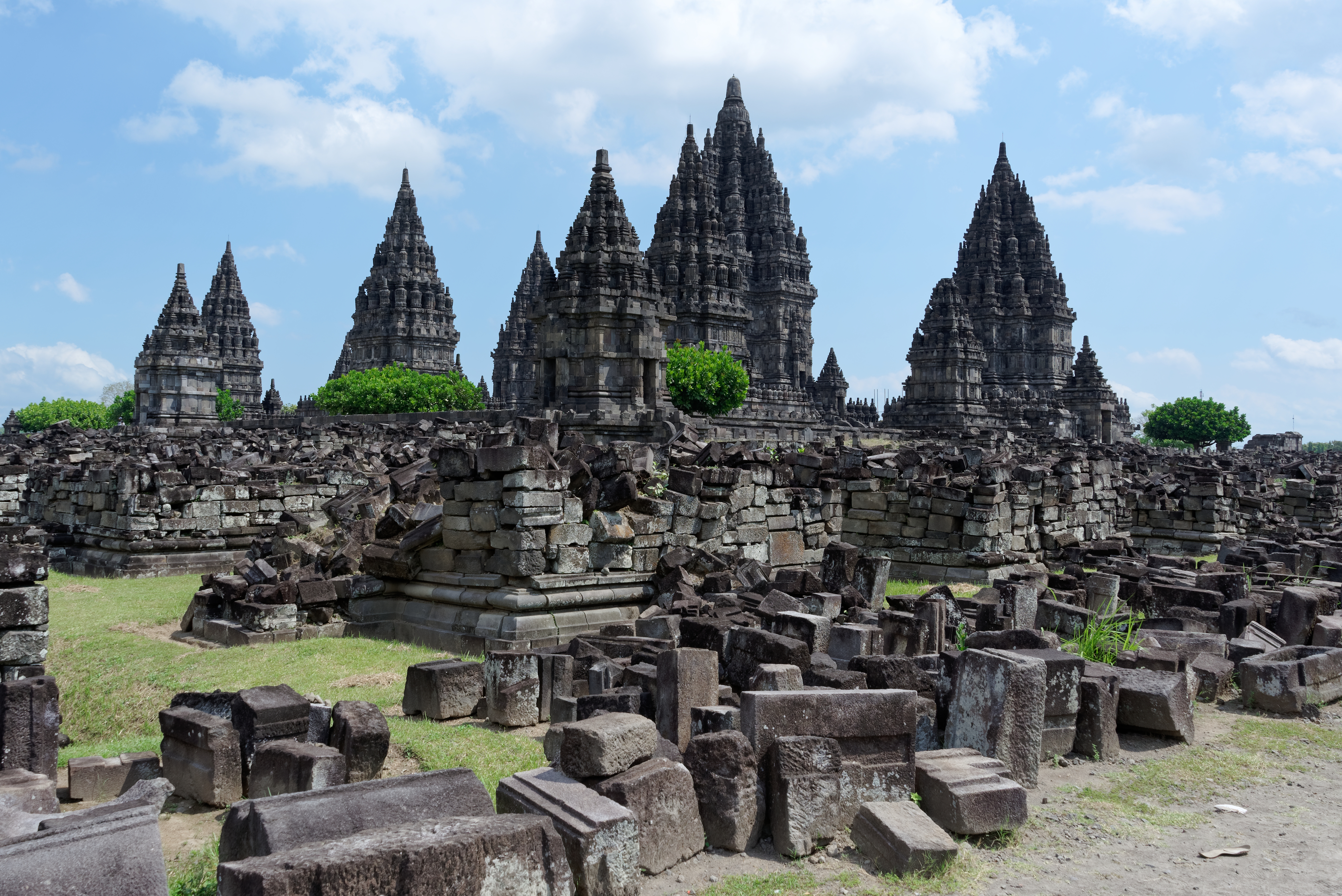
The Prambanan temple complex, constructed around 850 CE, is the largest Hindu temple site in Indonesia. At its center stands the 47-meter-tall Candi Siwa (Shiva Temple), a structure whose design creates a distinct acoustic environment. The temple's primary building material is andesite, a hard, dense volcanic rock. The smooth, non-porous surfaces of the cut andesite blocks reflect sound waves rather than absorbing them. Materials like smooth, painted concrete have a sound absorption coefficient close to zero, meaning they reflect almost all sound that strikes them. This high reflectivity is fundamental to the temple's acoustic character.
Inside the Shiva temple is the main chamber, or garbhagriha, a relatively small, cubical space that houses a statue of Shiva. This chamber acts as a resonance cavity. When sound is produced within this space—such as through Vedic chanting or the playing of instruments—the sound waves bounce between the hard parallel walls of andesite. This causes a rapid build-up of sound energy and a long reverberation time. While specific acoustic measurements for Prambanan are not widely published, similar stone chambers in Hindu temples are known to be highly reverberant. The geometry of the room and the reflective nature of the stone work together to amplify and sustain sound, creating an immersive sonic experience for anyone within the chamber.
An Architecture for Ritual
The acoustic properties of the Shiva temple's inner chamber are directly linked to its ritual function. Hindu worship involves chanting mantras and prayers, sounds that are enhanced in a reverberant space. The sustained notes and overlapping harmonics generated by the room's acoustics would lend a powerful, ethereal quality to vocalizations. This effect turns the architectural space into part of the religious ceremony, augmenting the spiritual atmosphere.
The design of the larger complex also contributes to a varied acoustic experience. The enclosed, highly reverberant garbhagriha contrasts with the more open galleries and courtyards outside. This creates a transition from one sonic environment to another as a person moves through the temple grounds. The complex narrative reliefs depicting the Ramayana epic, carved into the temple walls, are not perfectly flat. These uneven surfaces can act as primitive sound diffusers, scattering sound waves to prevent harsh, distinct echoes and creating a more complex and enveloping sound field in the areas immediately surrounding the temples. The combination of highly reflective chambers and diffusive exterior walls shows a practical understanding of how architectural form shapes sound.