The Great Drying
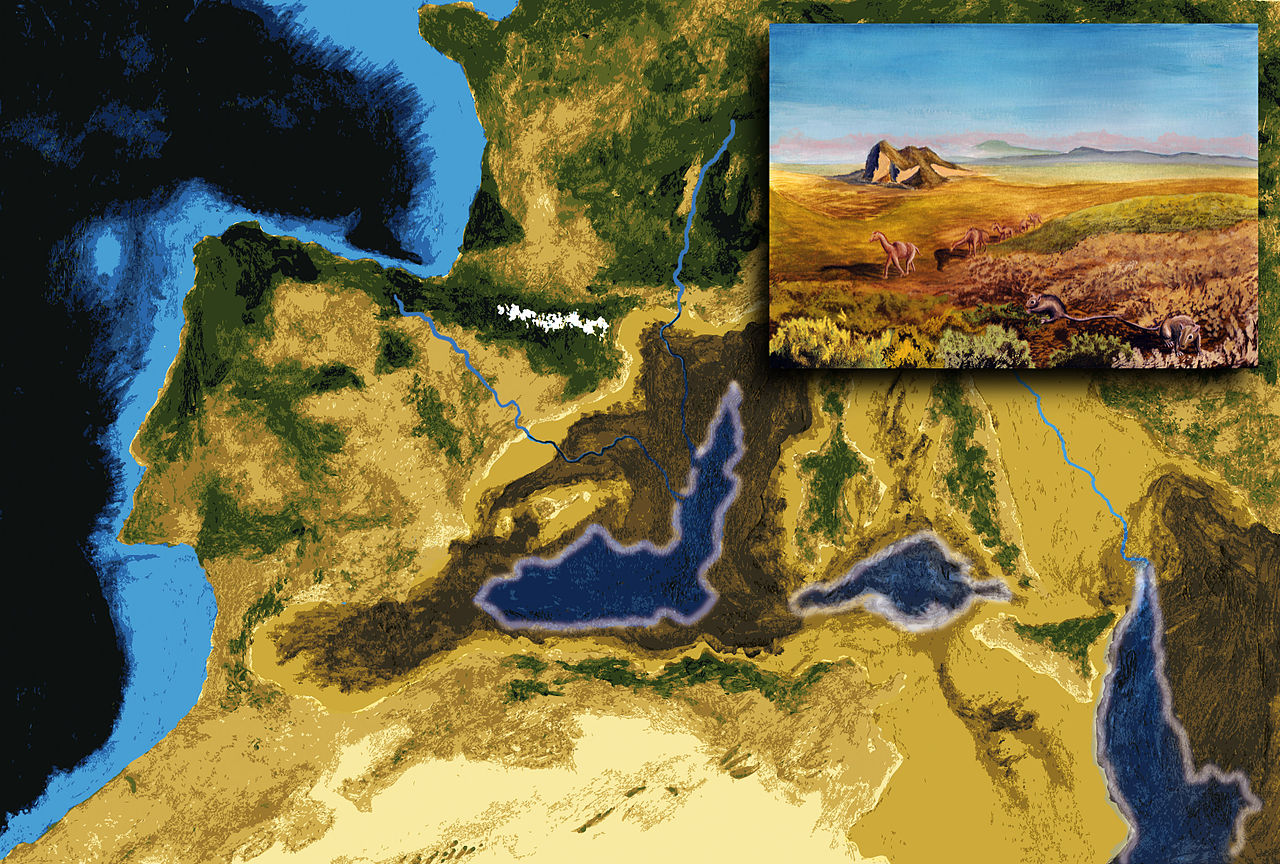
Between 5.96 and 5.33 million years ago, the Mediterranean Sea experienced a period of deep environmental change known as the Messinian Salinity Crisis. Tectonic movements, specifically the collision of the African and Eurasian plates, caused the uplift that closed the marine gateways connecting the Mediterranean to the Atlantic Ocean. Cut off from its primary source of water, the sea began to evaporate faster than rivers could replenish it. Within a thousand years, the basin was nearly completely dry.
This desiccation turned the Mediterranean basin into a vast, hot salt desert, with some areas dropping 3 to 5 kilometers below global sea level. The evaporation of the seawater left behind an enormous volume of salt and other minerals called evaporites. These deposits, totaling over one million cubic kilometers of salt, accumulated on the former seabed. In some of the deeper basins, these salt layers reached a thickness of up to 3 kilometers. In Sicily, which at the time was a series of tectonically active basins, thick deposits of halite (rock salt) and gypsum accumulated. These ancient salt beds are now uplifted and exposed in the Caltanissetta Basin in central Sicily.
The Zanclean Deluge
The crisis ended abruptly around 5.33 million years ago with a cataclysmic event called the Zanclean Flood. The natural dam at the Strait of Gibraltar breached, allowing the Atlantic Ocean to pour back into the desiccated basin. The refilling was not gradual but one of the most dramatic floods in Earth's history.
The initial flow of water eroded the breach, rapidly widening the channel. At its peak, the flood is estimated to have had a flow rate of about 100 million cubic meters per second, a thousand times greater than the modern Amazon River. This torrent of water rushed down a drop of over a kilometer, creating the largest waterfall known in the planet's history. The water level inside the Mediterranean basin rose by as much as 10 meters per day. The entire Mediterranean Sea was refilled in a remarkably short period, possibly as little as a few months to two years. The force of the flood was immense; by the time the water reached Sicily, it was moving at speeds up to 72 miles per hour (32 meters per second). This rapid deluge buried the thick Messinian salt layers under a new blanket of marine sediment, preserving them as a record of a time when the Mediterranean Sea vanished.