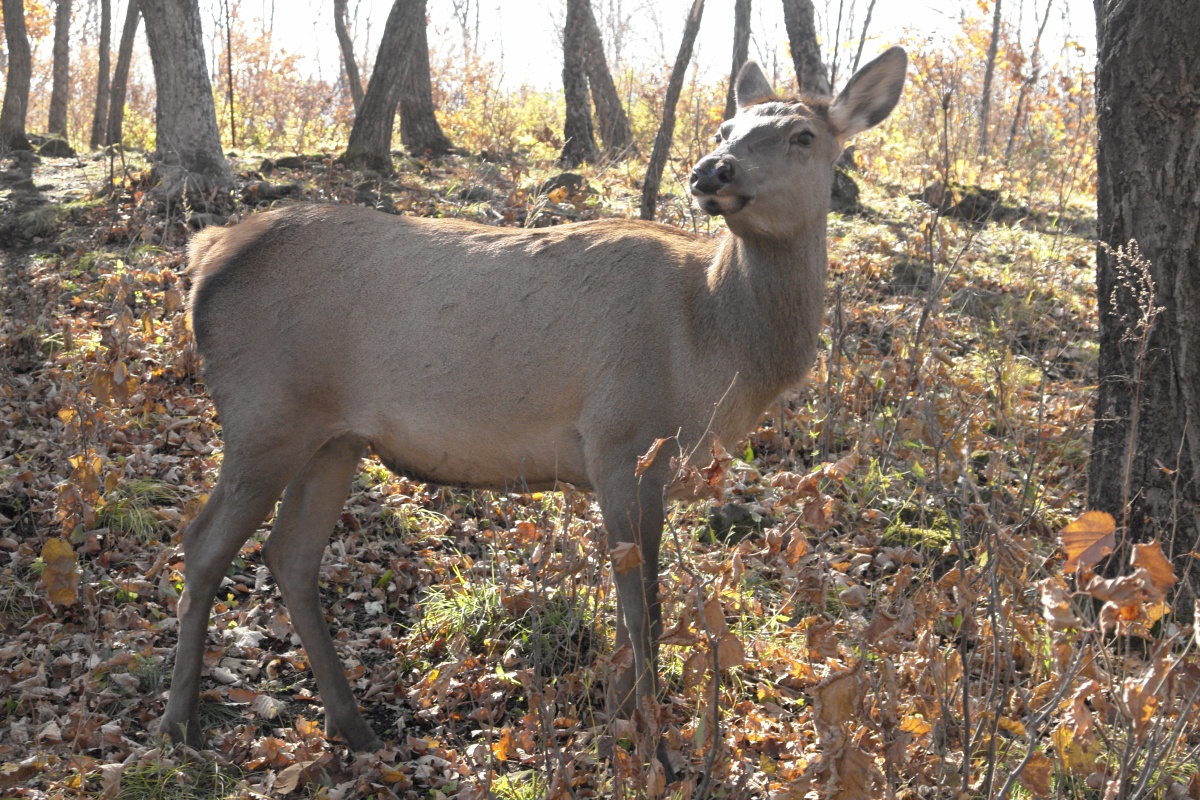
A distinct genetic lineage
The deer found in the mountainous forests of Gangwon Province is the Manchurian red deer, Cervus canadensis xanthopygus. Despite its common name, genetic studies starting in the late 1990s confirmed it is not a "red deer" (Cervus elaphus) like those in Europe. Instead, it is a subspecies of the North American Elk, or Wapiti. Its closest relatives live across the Bering Strait. Mitochondrial DNA analysis shows a significant divergence between the Eastern (Wapiti) and Western (Red Deer) lineages.
The Korean peninsula's geography directly shaped shaping this animal's evolution. During Pleistocene ice ages, the Baekdudaegan mountain range, which runs down the peninsula, was a glacial refugium. While ice sheets and harsh climates made surrounding regions uninhabitable, this mountainous backbone provided a stable environment where animal and plant populations could persist. This long-term isolation allowed the Manchurian red deer on the peninsula to develop unique genetic characteristics. It now occupies an intermediate genetic position between the Siberian deer populations to the north and other Chinese populations to the west, retaining features of both while remaining distinct.
The wild population in South Korea was entirely wiped out by the mid-20th century due to overhunting and habitat destruction. All Manchurian red deer currently in the country are the result of reintroduction programs. These conservation efforts, managed by organizations like the National Institute of Ecology, are gradually re-establishing a population in protected areas, though the global population remains low, estimated at fewer than 10,000 individuals in the wild.
Biology and appearance
The Manchurian red deer is the smallest subspecies of wapiti. Adult males, called stags or bulls, typically weigh between 200 and 250 kg and stand about 1.5 meters at the shoulder. Females, or hinds, are smaller, weighing 150 to 180 kg. Their coat changes seasonally, shifting from a reddish-brown in the summer to a grayish-brown in winter. One feature is the large, pale "yellow rump" patch that gives the subspecies its scientific name, xanthopygus. Males grow a dark, shaggy mane on their necks during the winter and possess relatively slender antlers that can have five or six tines on each side.
These deer are adapted to the mixed deciduous forest environments of Gangwon Province. They are herbivores that both graze and browse, with a diet that includes grasses, shrubs, leaves, and tree bark. They inhabit the temperate mixed forests and low hills that characterize the region. The mountainous national parks of Gangwon, such as Seoraksan National Park, are the habitat for these animals to thrive.