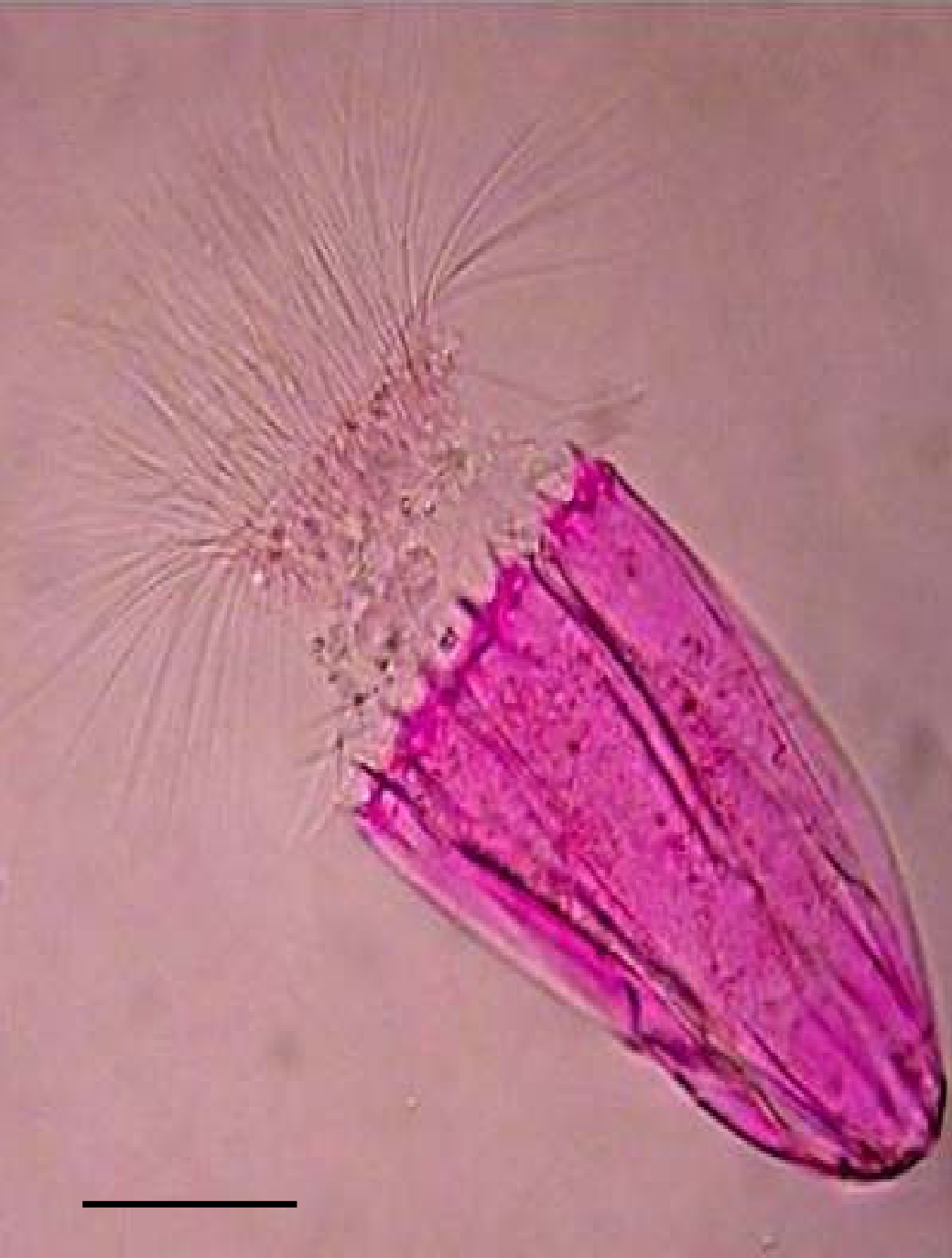
An environment hostile to animals
Deep in the Mediterranean Sea, about 200 kilometers off the western coast of Crete, lies a basin named L'Atalante. The surface of this basin begins around 3,500 meters below sea level. It is one of several "deep hypersaline anoxic basins" (DHABs) in the area, which are essentially dense lakes of brine on the ocean floor. The L'Atalante basin's water is nearly saturated with salt, making it about eight times saltier than normal seawater. This extreme density prevents the brine from mixing with the oxygenated seawater above it. This creates a completely anoxic environment—one devoid of free oxygen.
This strange habitat, with its high salinity and immense pressure lack of oxygen, was long thought to be survivable only by single-celled life forms like bacteria and archaea. The discovery of any animal life here was unexpected. Yet in 2010, researchers announced they had found three species of multicellular animals thriving in the toxic sediment. These organisms, belonging to the phylum Loricifera, were the first animals ever found that live their entire lives without oxygen.
A different kind of respiration
Loriciferans are microscopic invertebrates, typically less than a millimeter long. They possess a complex body, with a head, mouth, and digestive system, all protected by an outer shell-like casing called a lorica. The three species discovered in the L'Atalante basin—Spinoloricus cinziae, Rugiloricus nov. sp., and Pliciloricus nov. sp.—were found to be metabolically active and even reproducing in the anoxic ooze.
The reason for their survival is a radical departure from the biology of all other known animals. Animal cells generate energy through organelles called mitochondria, a process that requires oxygen. The anaerobic loriciferans have no mitochondria. Instead, their cells are packed with different organelles that resemble hydrogenosomes. Hydrogenosomes are known to exist in some single-celled anaerobes and allow for energy production without any need for oxygen. This discovery marked the first time that a multicellular organism was found to rely on this alternative metabolic pathway. Researchers confirmed the animals were alive using a variety of methods, including electron microscopy and biochemical analyses that detected metabolic activity, and even found that some of the retrieved specimens contained eggs.