A delicate balance tipped
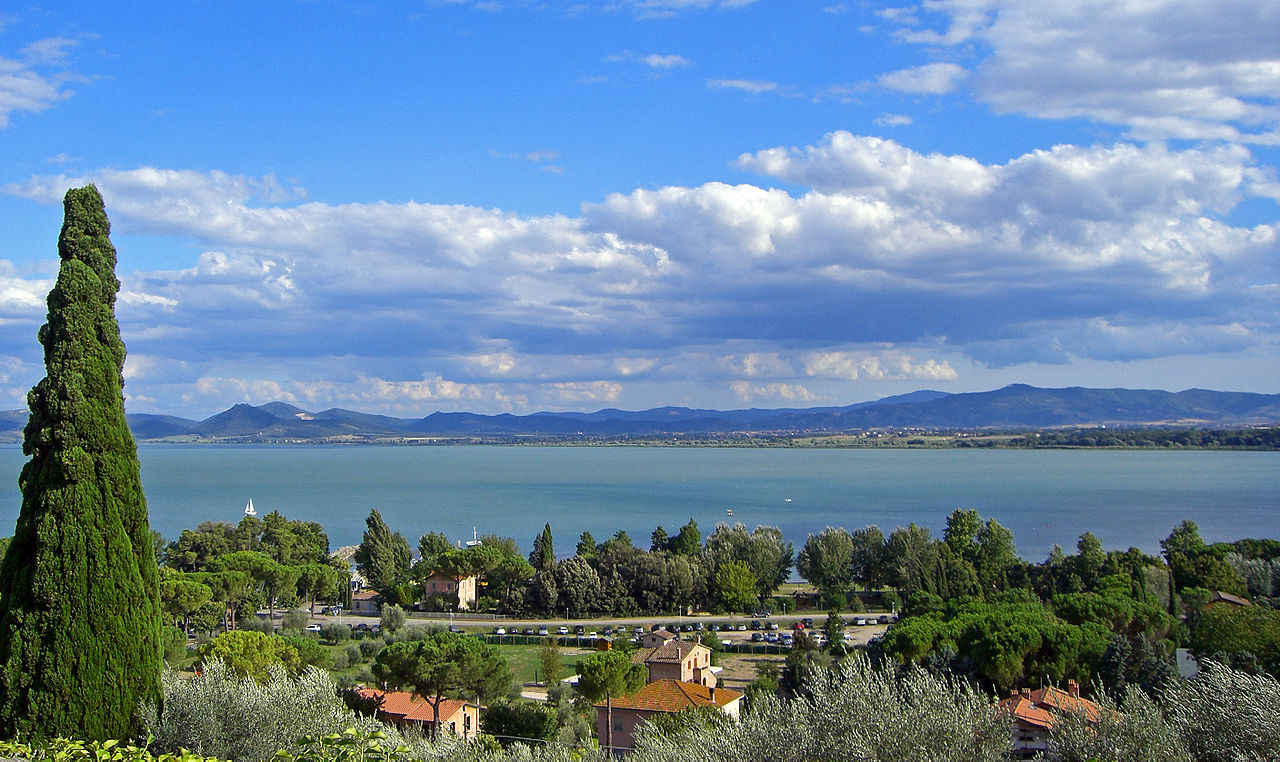
Lake Trasimeno, the fourth largest lake in Italy, is a wide, shallow basin with an average depth of just 4.7 meters and a maximum depth of around 6 meters. Its large surface area of 128 square kilometers, combined with its shallowness, makes it particularly sensitive to environmental changes. The lake has no major natural river flowing into it; its water level depends almost entirely on rainfall and its water is replaced naturally only once every 22-24 years. This long residence time means that pollutants, once they enter the lake, are slow to leave.
The primary environmental pressure on the lake is eutrophication, an over-enrichment of nutrients. The main sources are phosphorus and nitrogen from agricultural activities in the lake's 396 square kilometer catchment area. Approximately 70% of this land is cultivated, with a significant portion dedicated to intensive agriculture requiring irrigation. This runoff introduces high levels of nutrients that the lake's ecosystem cannot process, leading to a state that fluctuates between mesotrophic and eutrophic.
The green consequences
The excess nutrients fuel massive algal blooms, particularly of cyanobacteria. These blooms cloud the water, reducing transparency and killing off submerged aquatic plants that are habitat for fish. When the dense blooms of algae die and decompose, the process consumes large amounts of dissolved oxygen in the water, which can create hypoxic (low-oxygen) conditions harmful to fish and other aquatic life.
Specific species of cyanobacteria have been identified in the lake, including potentially toxic species like Cylindrospermopsis raciborskii (also known as Raphidiopsis raciborskii), which was first reported here in 1995. Other dominant species include various types of Oscillatoria and Leptolyngbya limnetica. In July 2019, a bloom of Leptolyngbya limnetica was so severe that it triggered a temporary bathing ban, with cell counts reaching into the billions per liter. Studies have shown an inverse correlation between the lake's water level and chlorophyll-a concentrations (a proxy for algae); as climate change contributes to lower water levels, the concentration of algae increases.