A Volcanic Isotope Factory
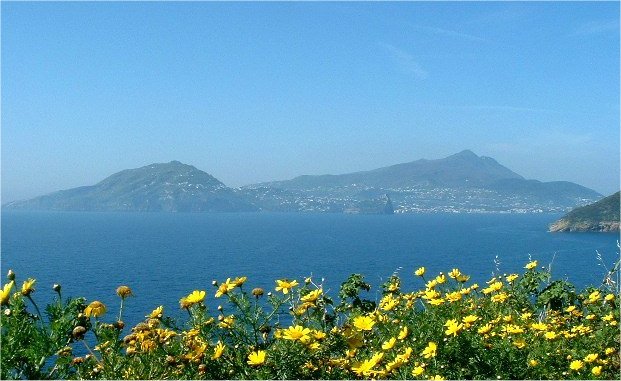
The island of Ischia, a 47-square-kilometer landmass at the northern end of the Gulf of Naples, is the emergent peak of a larger volcanic complex. Its geology is a composite of volcanic rocks such as trachytes, phonolites, and alkali-trachytes, formed by a history of explosive and effusive eruptions dating back at least 150,000 years. This intense volcanic activity causes Ischia’s most famous feature: its hydrothermal system, comprising 103 thermal springs and 69 fumarole groups.
The therapeutic properties of these waters, used since the 8th century B.C., have a specific geochemical origin. The main ingredient is Radon-222, a naturally occurring radioactive gas. This isotope is a product of the decay chain of Uranium-238, an element present in the island's volcanic rocks. As rainwater and seawater percolate through the porous trachytic ignimbrite and tuff, they are heated by a shallow geothermal gradient. During this subterranean passage, the water dissolves minerals and becomes enriched with radon gas that emanates from the uranium-bearing rock. In 1918, scientist Marie Curie studied the springs and confirmed the presence of radon, along with radium, thorium, and uranium.
Tidal Influence on Radon Levels
One of the most distinct characteristics of Ischia's thermal system is the periodic fluctuation of radon concentrations in the water, a phenomenon directly linked to the ocean tides. The island's aquifer system is sensitive to the changing weight of the sea in the Bay of Naples, a process known as tidal loading.
During high tide, the increased pressure of the overlying seawater compresses the aquifer. This compression reduces the ability of dissolved gases, including radon and carbon dioxide, to escape from the groundwater into the springs. As the tide recedes, the pressure on the aquifer lessens. This decompression allows for greater exhalation, or "degassing," of radon from the groundwater. The result is a measurable cycle where radon concentrations in the thermal springs rise and fall with the twice-daily rhythm of the tides. This effect shows a direct, dynamic link between the solid earth of the volcanic island and the marine environment that surrounds it. Studies of similar coastal aquifers show that peak radon activities in water can lag behind the low tide by several hours, reflecting the time it takes for the pressure changes to propagate through the subsurface system.